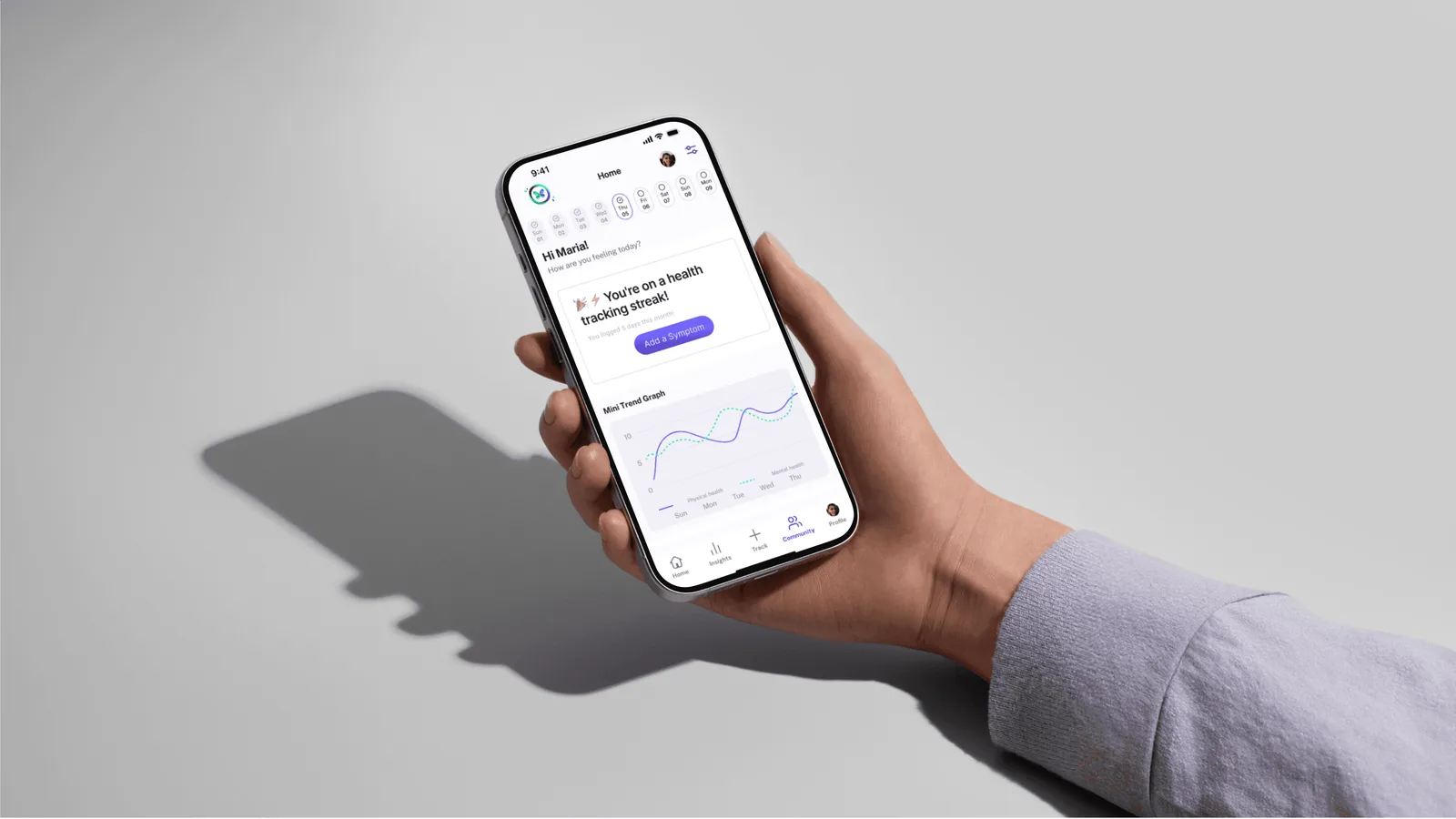
A hand holding a phone showing the VitalLoop home screen: Hi Maria, how are you feeling today, a health tracking streak card with an Add a Symptom button, and a Mini Trend Graph.

VitalLoop · 03

Transforming Fibromyalgia Care

How I Designed a Tool for Empowerment and Insight

  • Product Strategy
  • Health Tech
  • Design System

Designed conceptually as a self-directed project; not built or shipped. VitalLoop is a concept exploring symptom tracking, wearable integration, and community support for chronic illness care.

Bridging the Gaps in Chronic Illness Management

Millions with fibromyalgia face daily struggles of pain, confusion, and isolation. I created an app that simplifies symptom tracking, integrates wearable data, and builds a supportive community, redefining how patients manage their health and connect with others.

A close-up of an iPhone home screen with the VitalLoop app icon added next to Phone, Messages, and Camera, beside the VitalLoop app icon with a 3-notification badge and the Vitalloop wordmark.

The Strategy: Tracking, Support & Insights

We explored the daily experiences of patients and analyzed existing platform interactions to uncover pain points and prioritize features that would deliver real, meaningful support.
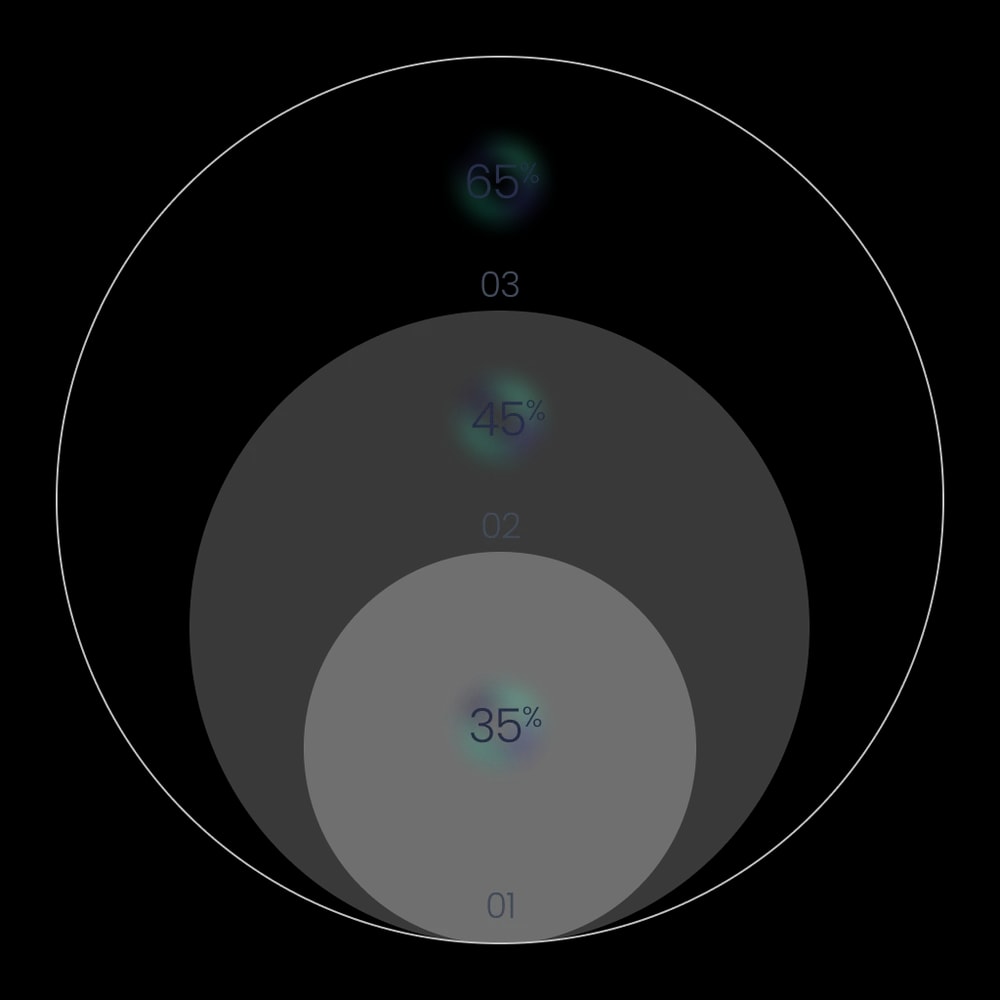
Three concentric circles labeled 01, 02, 03, each holding a percentage: 35% for 01, 45% for 02, 65% for 03.
01

Lack of Simple, Meaningful Symptom Tracking

Without simple, personalized tracking, users stop logging and miss patterns that matter.

02

Absence of a Supportive Community

Without a place to connect, users feel alone and lose motivation to manage their health.

03

No Wearable Integration or Actionable Insights

Unused or disconnected data means missed insights and lost trust in the app.

Most fibromyalgia apps fail to meet real user needs, they're too generic, disconnected from wearables, and emotionally flat. This project set out to change that by designing a solution that simplifies symptom tracking, delivers meaningful insights, and builds a space for support and connection.
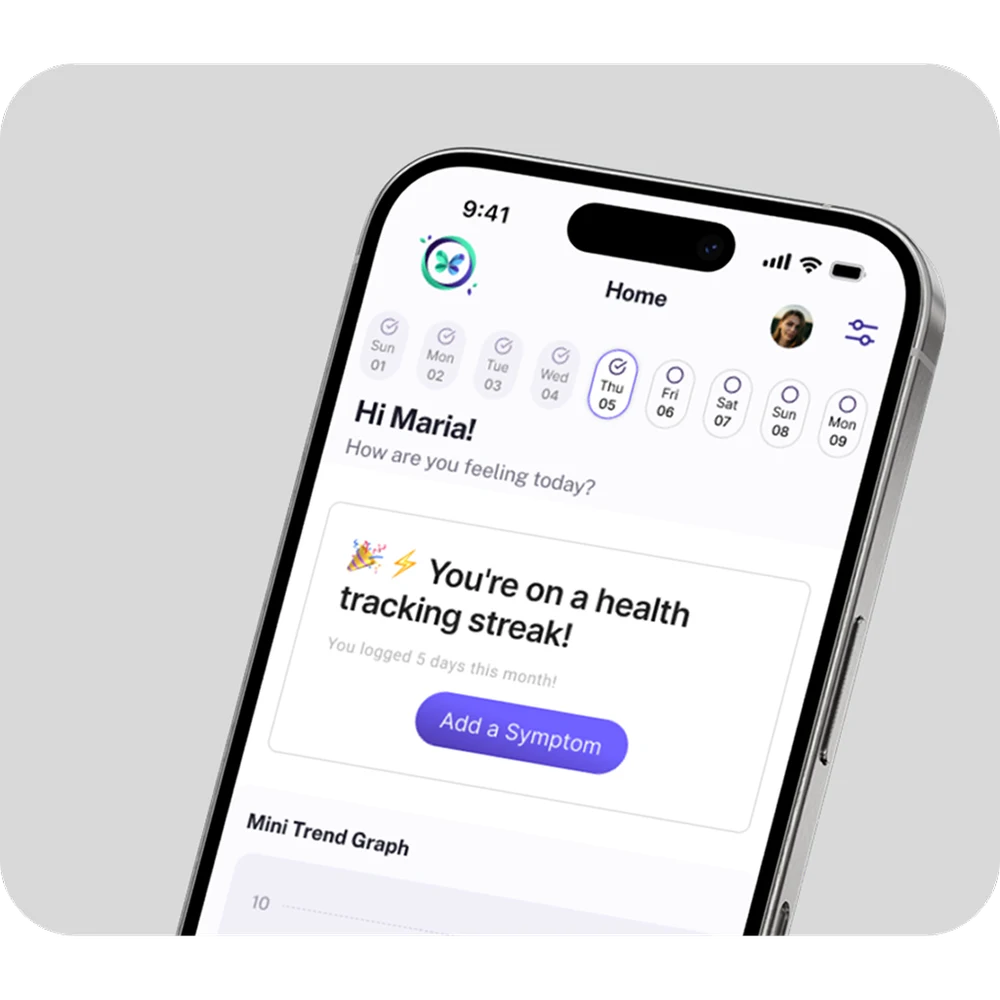
The VitalLoop home screen: Hi Maria, how are you feeling today, a health tracking streak card with an Add a Symptom button, and a Mini Trend Graph.

User Story

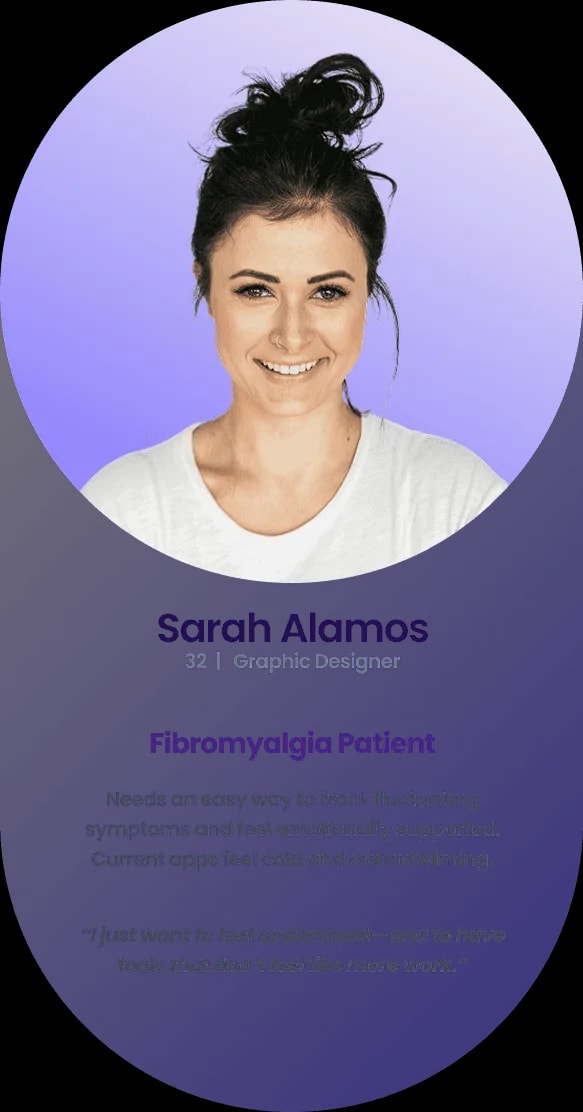
Sarah Alamos, 32, Graphic Designer, Fibromyalgia Patient. Needs an easy way to track fluctuating symptoms and feel emotionally supported; current apps feel cold and overwhelming. Quote: “I just want to feel understood—and to have tools that don't feel like more work.”
Michael Patel, 52, software engineer, Rheumatoid Arthritis. Wants to correlate physical activity or stress levels with joint pain and stiffness and reminders for medication. Quote: “If I can spot what triggers my flare-ups and stay on top of my meds, I feel like I'm in control again.”

Turning Needs Into Actionable Feature

Wearable Integration

Connect wearables to track sleep, heart rate, and activity. Get real-time insights and alerts before a flare hits.

Community Forums

Safe, moderated spaces to share stories, ask questions, and find empathy, not just answers.

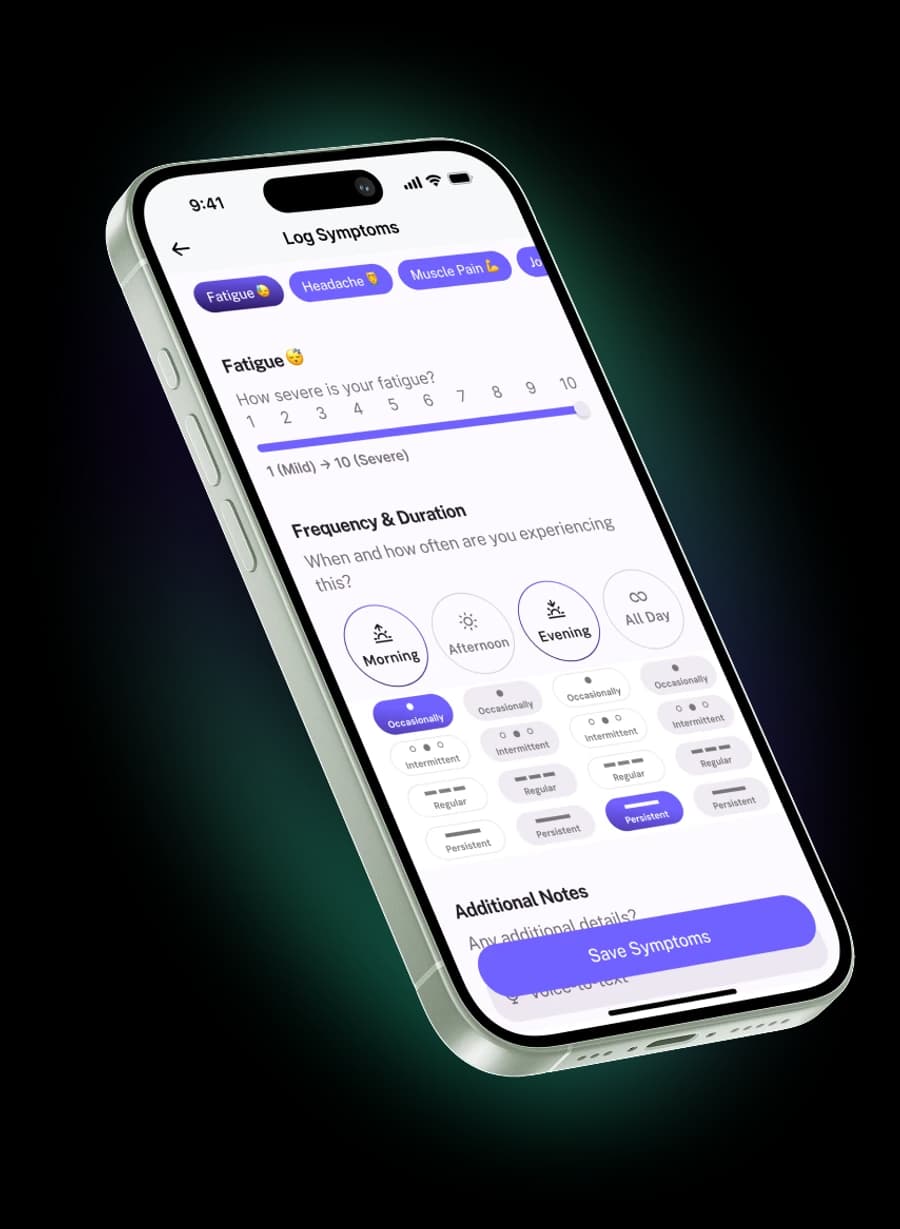
Personalized Symptom Tracking

Log pain, fatigue, and mental fog in seconds. See patterns through charts tailored to fibromyalgia's complexity.

Competitor Analysis

The Kano Model helps categorize features by how they affect user satisfaction, whether they're basic needs, performance drivers, or exciters. For chronic illness apps like VitalLoop, this model reveals where users feel underserved and highlights opportunities to create real value.
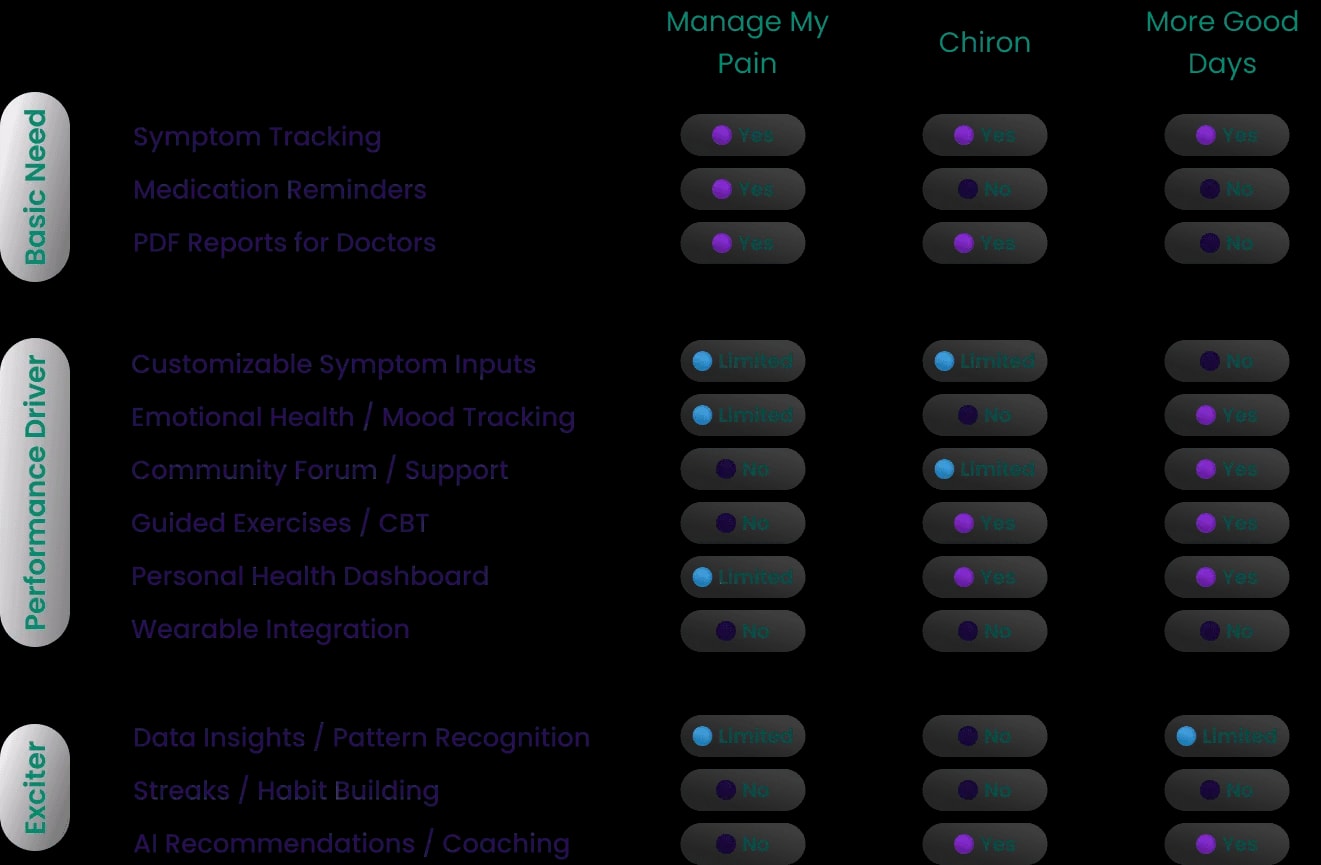
Kano model comparison of three competitor apps (Manage My Pain, Chiron, More Good Days) across Basic Need, Performance Driver, and Exciter rows: Symptom Tracking, Medication Reminders, PDF Reports for Doctors, Customizable Symptom Inputs, Emotional Health / Mood Tracking, Community Forum / Support, Guided Exercises / CBT, Personal Health Dashboard, Wearable Integration, Data Insights / Pattern Recognition, Streaks / Habit Building, and AI Recommendations / Coaching.

Underserved Needs in Chronic Care Apps
Lack of Emotional Support

Emotional support and community features are requested in more than 1/3 of app reviews.

No Wearable Syncing

3 out of 5 top apps lack wearable syncing, despite users owning devices like Fitbit or Apple Watch.

Symptom Tracking Fatigue

Over 70% of user reviews across leading apps mention difficulty maintaining symptom tracking.

Listening to the Community

This concept is grounded in extensive secondary research, including app store reviews, patient forums, and user discussions across chronic illness communities. By synthesizing dozens of real-world experiences and frustrations, I identified three recurring needs that consistently surfaced across platforms and conditions. These insights became the foundation for the design of VitalLoop.
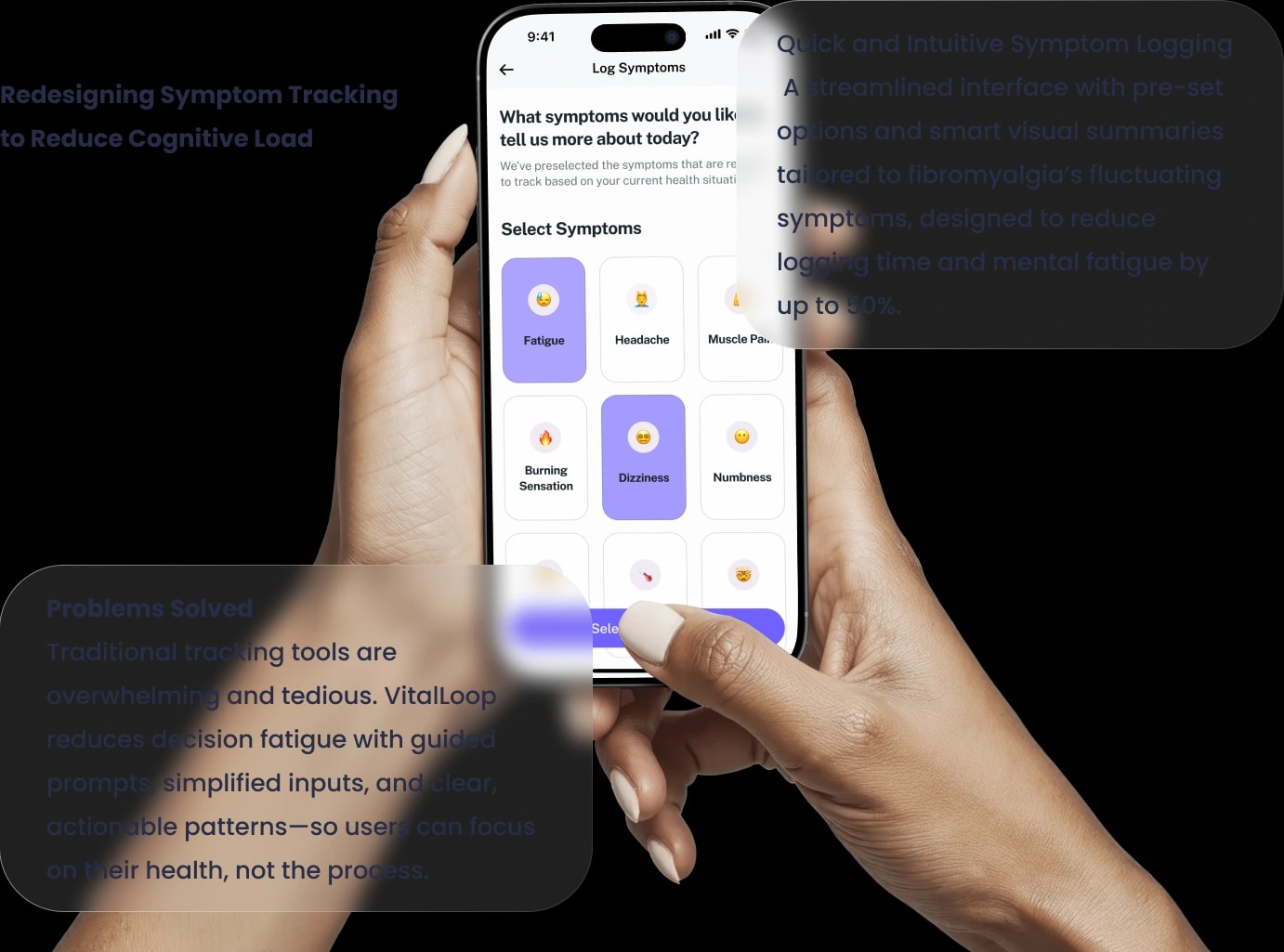
Two hands holding a phone on the Log Symptoms screen, selecting Fatigue and Dizziness from a symptom grid, captioned Redesigning Symptom Tracking to Reduce Cognitive Load, next to a card reading Quick and Intuitive Symptom Logging.

Designing for Belonging and Shared Experiences
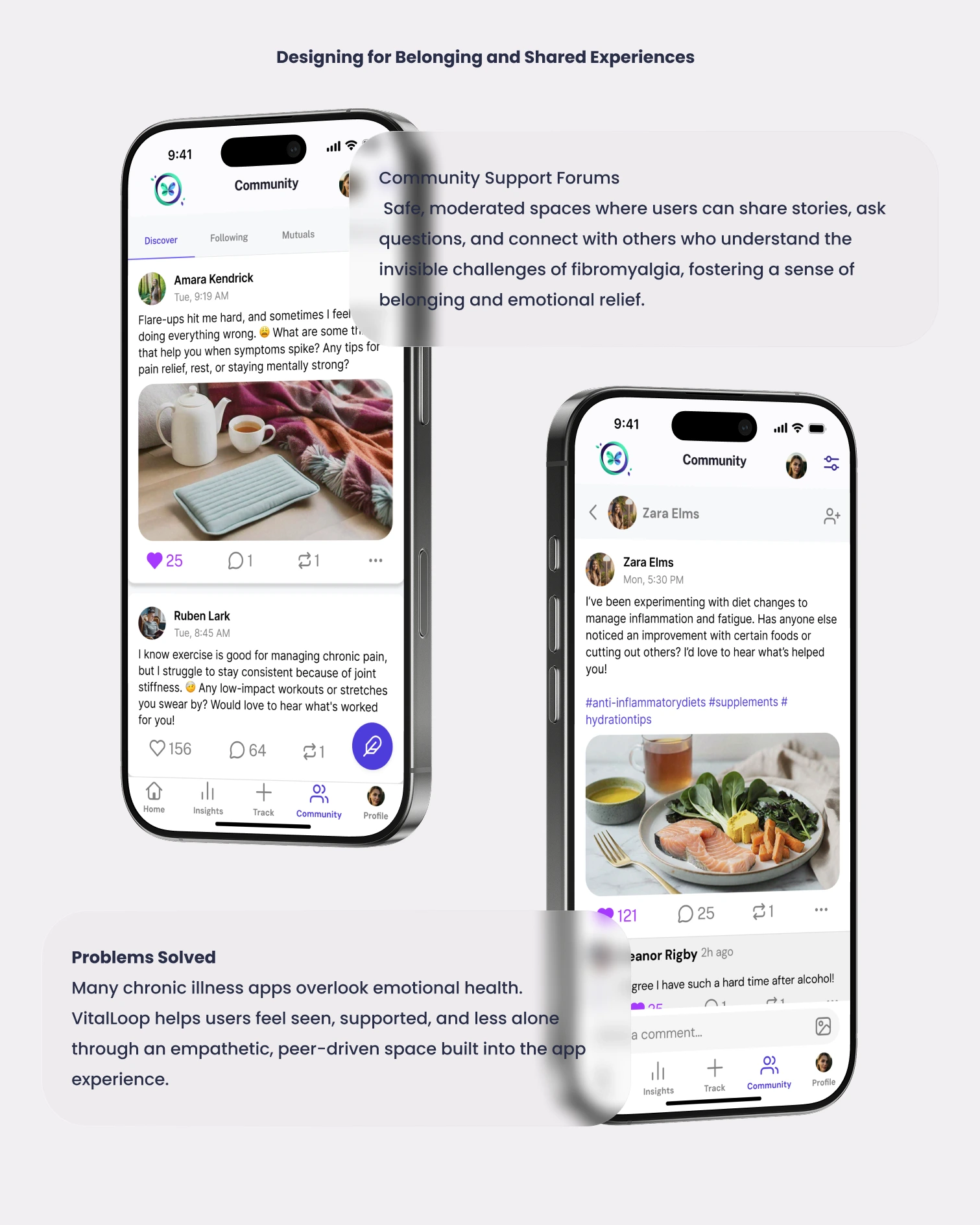
Designing for Belonging and Shared Experiences: two phones showing the VitalLoop Community feed — Amara Kendrick and Ruben Lark discussing flare-up relief, and Zara Elms sharing an anti-inflammatory diet post — next to a Community Support Forums card and a Problems Solved paragraph.
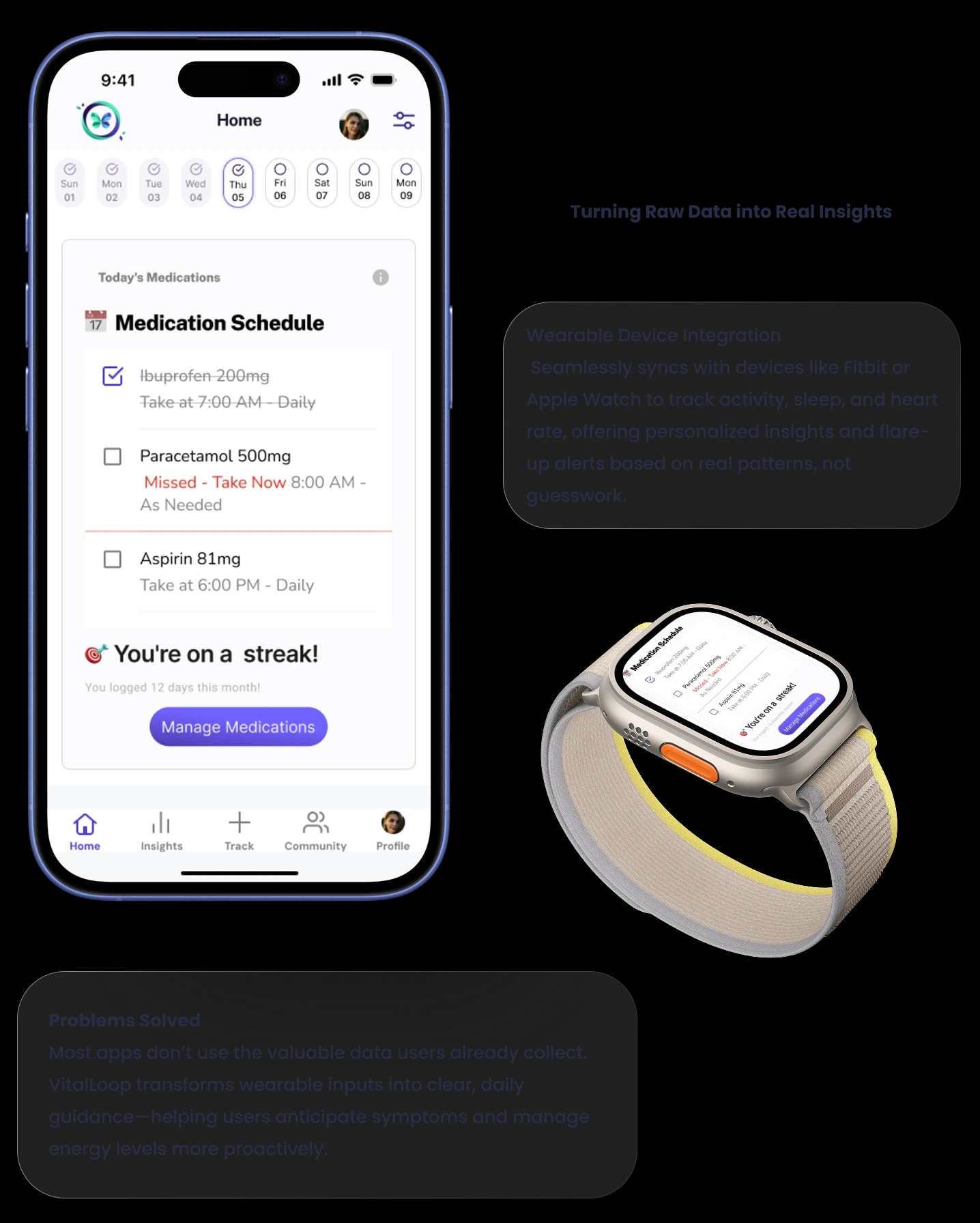
An iPhone showing a medication schedule and streak card next to an Apple Watch Ultra displaying the same medication schedule, captioned Turning Raw Data into Real Insights and Wearable Device Integration.

Sitemap

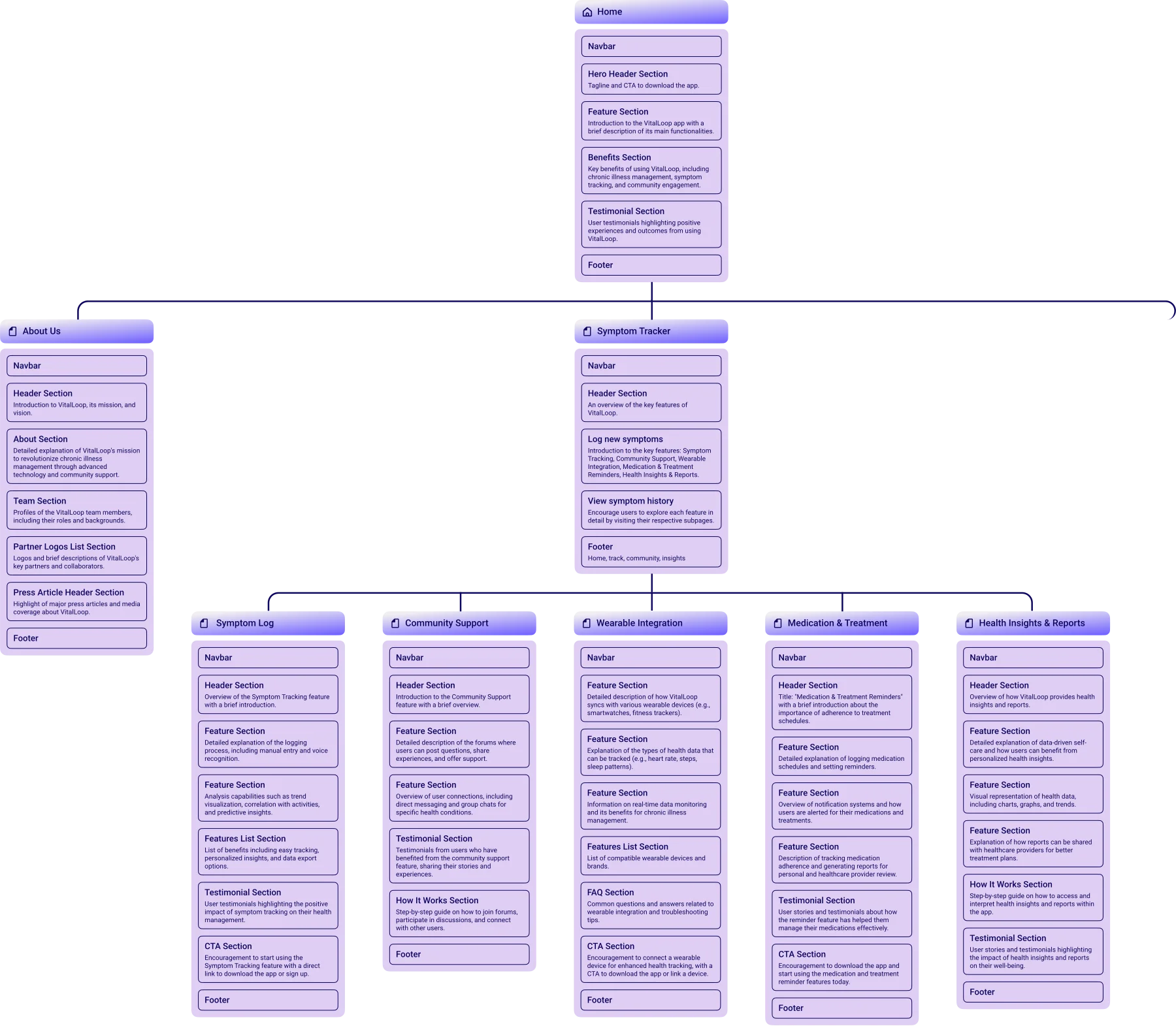
Site map, first half: Home (Navbar, Hero Header, Feature Section, Benefits Section, Testimonial Section, Footer) branching into About Us (mission, About Section, Team Section, Partner Logos) and Symptom Tracker (Log new symptoms, View symptom history, Footer).
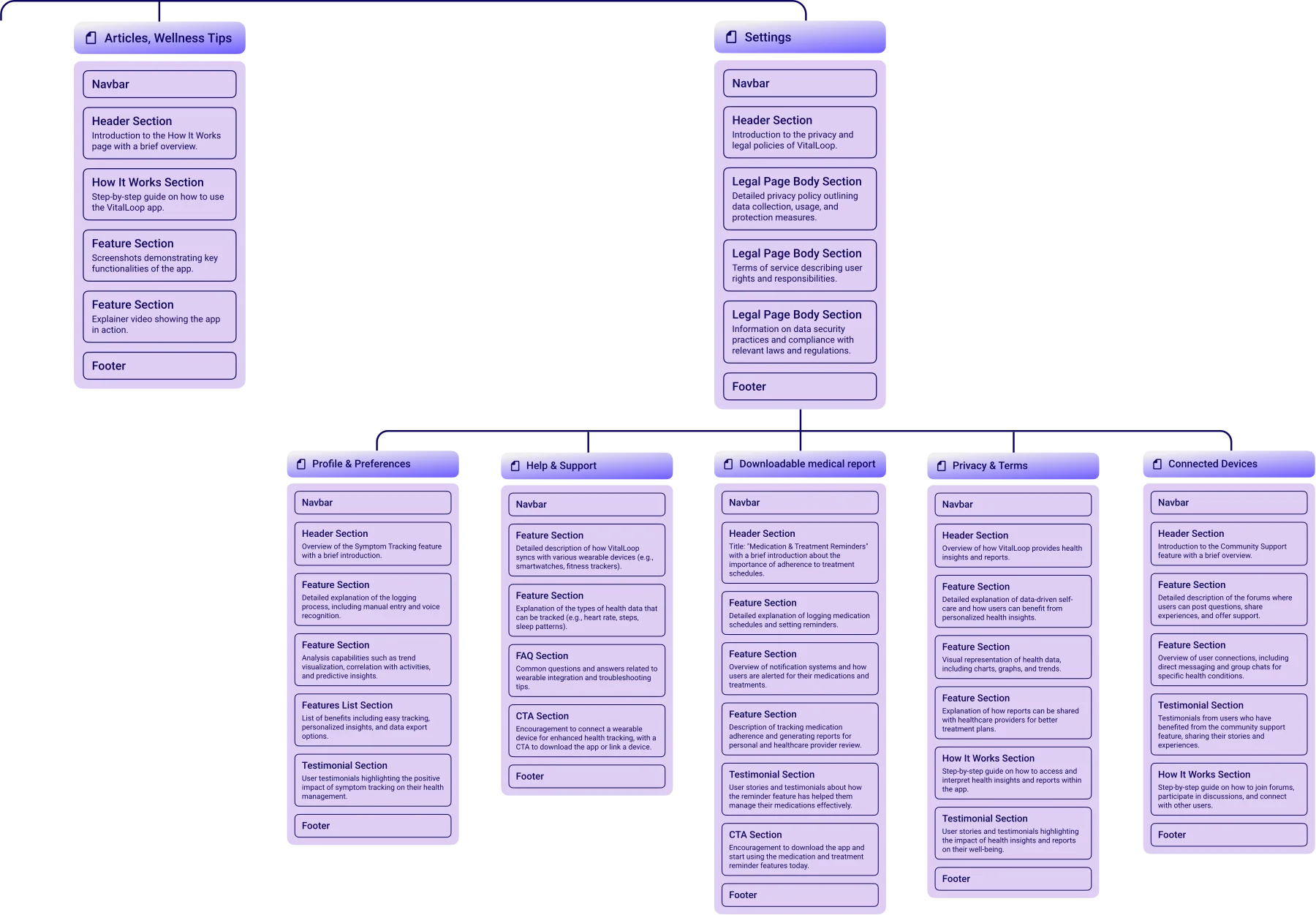
Site map, second half: Articles & Wellness Tips, Settings (Legal Page Body sections for privacy and terms), Profile & Preferences, Help & Support, Downloadable Medical Report, and Privacy & Terms.

Wireframes

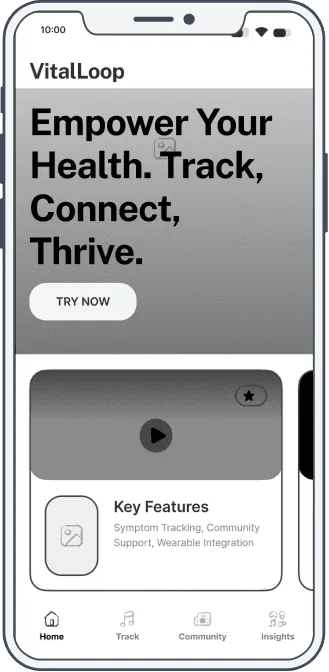
Wireframe of the VitalLoop home screen: Empower Your Health. Track, Connect, Thrive. headline, a Try Now button, and a Key Features card listing Symptom Tracking, Community Support, Wearable Integration.
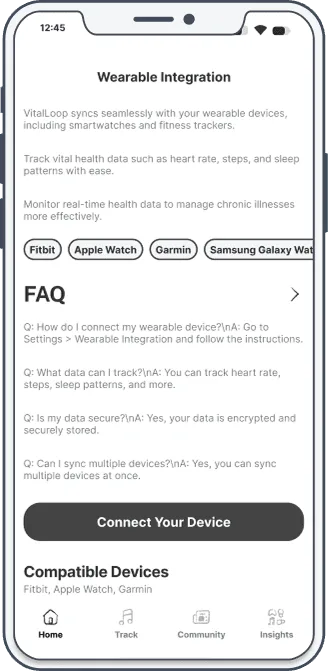
Wireframe of a Wearable Integration detail screen: device syncing copy, Fitbit / Apple Watch / Garmin / Samsung Galaxy Watch chips, an FAQ accordion, and a Connect Your Device button.
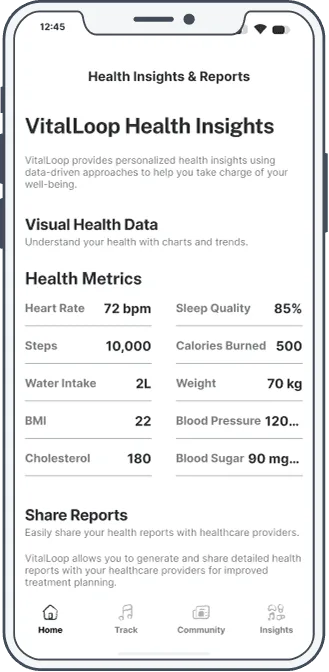
Wireframe of a Health Insights & Reports detail screen: a Health Metrics list (heart rate, steps, sleep quality, calories, water intake, weight, BMI, blood pressure, cholesterol, blood sugar) and a Share Reports section.
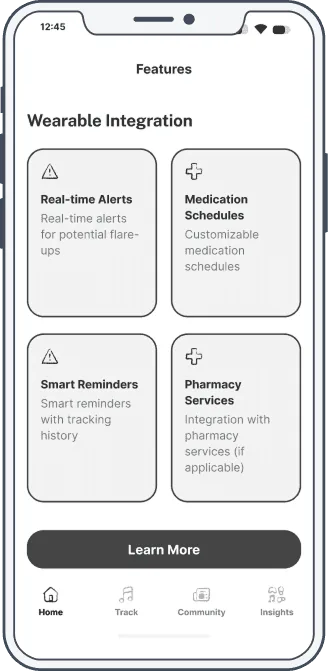
Wireframe of a Wearable Integration features grid: Real-time Alerts, Medication Schedules, Smart Reminders, Pharmacy Services, with a Learn More button.
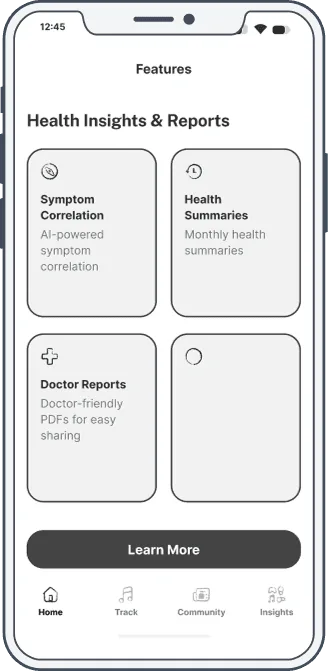
Wireframe of a Health Insights & Reports features grid: Symptom Correlation, Health Summaries, Doctor Reports, with a Learn More button.
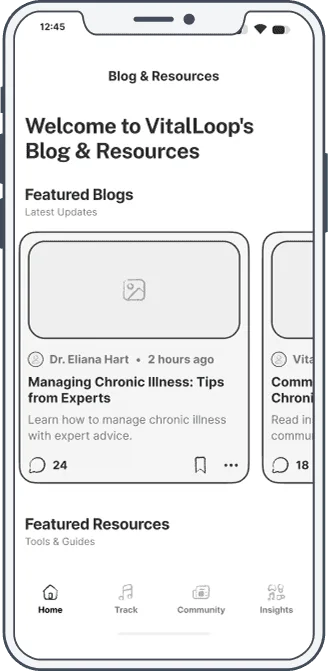
Wireframe of the Blog & Resources screen: Featured Blogs list including Managing Chronic Illness: Tips from Experts by Dr. Eliana Hart.
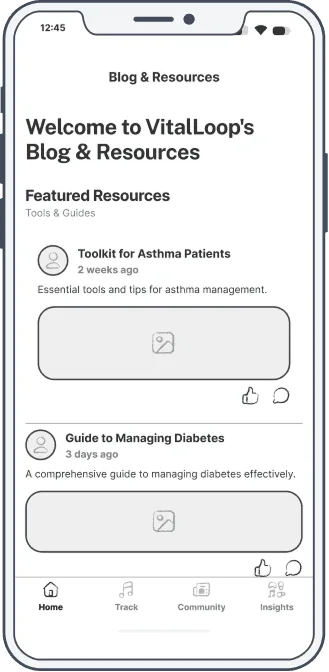
Wireframe of the Blog & Resources screen: Featured Resources list including Toolkit for Asthma Patients and Guide to Managing Diabetes.
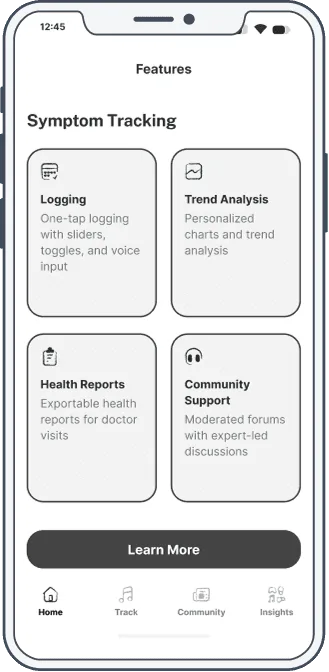
Wireframe of a Symptom Tracking features grid: Logging, Trend Analysis, Health Reports, Community Support, with a Learn More button.
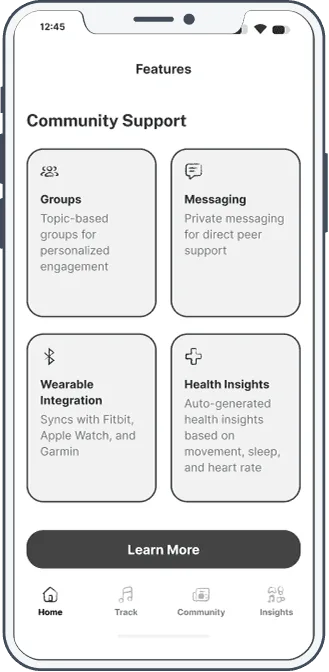
Wireframe of a Community Support features grid: Groups, Messaging, Wearable Integration, Health Insights, with a Learn More button.
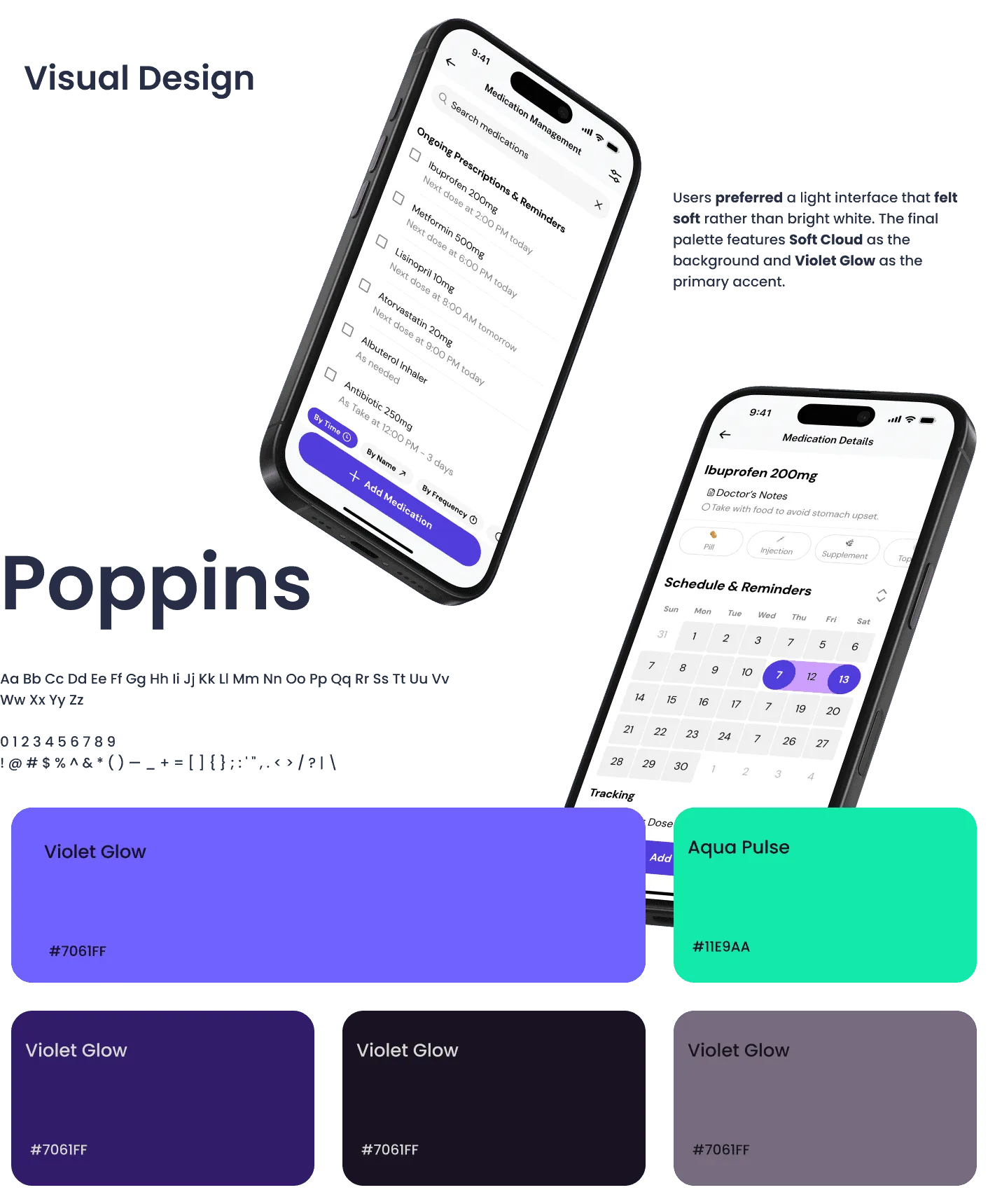
Visual Design panel: two phone mockups (Medication Management list and Medication Details with a calendar), the Poppins typeface specimen, and the Violet Glow and Aqua Pulse color swatches.
A closing card reading Thank You For Watching, with the VitalLoop butterfly mark, followed by Want to make a project? I'll be happy to collaborate; contact me at l.godefroy.design@gmail.com.
Perfect

Let's talk

contact@linagodefroy.com
Open to new opportunities

Product designer looking for her next team. If you’re hiring, I’d love to hear what you’re building.

contact@linagodefroy.com